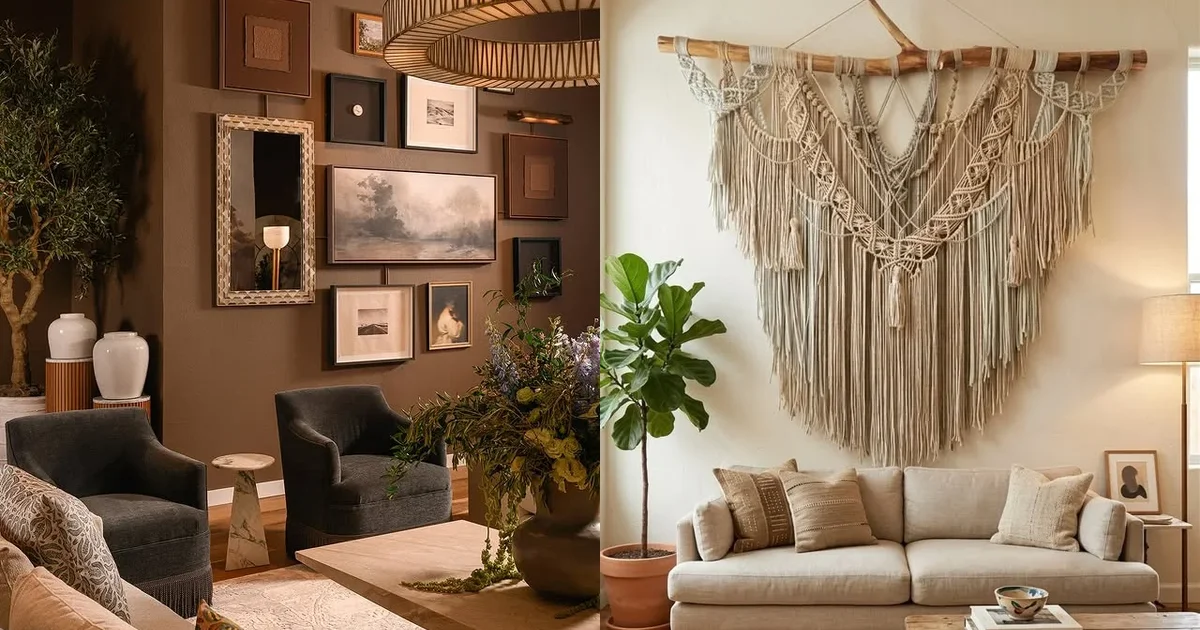
19 Living Room Wall Decor That Bring Warmth to Every Corner
A blank wall can make even a well furnished room feel unfinished. The right piece above the sofa, beside the fireplace, or along a hallway wall pulls the furniture together and gives the room a clear focal point. It does not need to cost a lot or require a full redo.
This roundup of living room wall decor brings you 19 warm, livable ideas, from gallery walls and woven baskets to mirrors, shelves, and handmade textiles. Each one works in a real home, and most can be hung in a single afternoon.
Gallery Wall Above Sofa
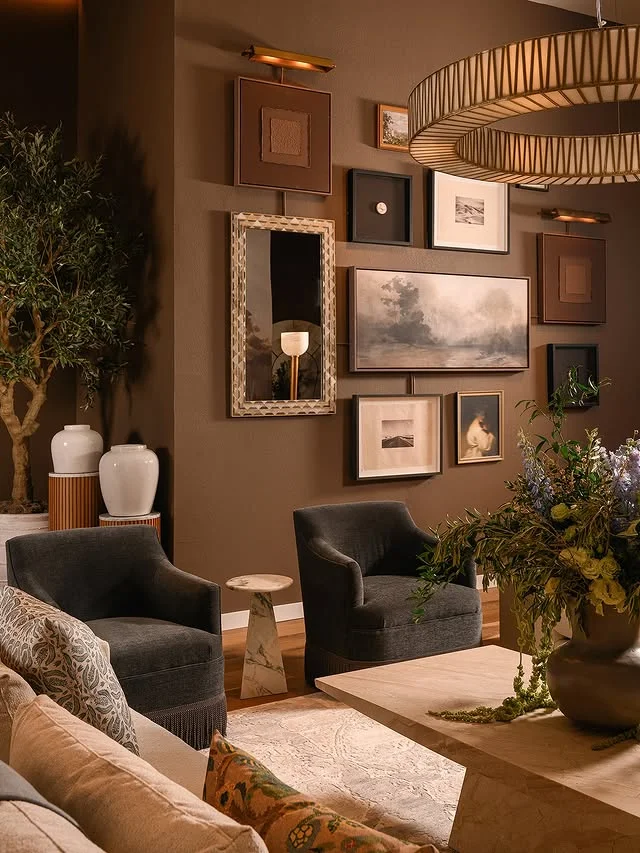
A gallery wall above the sofa is the classic way to fill a long blank wall, and it works because it is personal. Mix framed prints, photos, and one small textile or mirror so the wall reads as a collection rather than a matching set. Keep one color running through the frames or the mats so the mix stays calm.
- Lay every frame on the floor first and shuffle until the shape feels balanced.
- Cut kraft paper to each frame size and tape the shapes to the wall to test the layout.
- Start hanging from the center piece and work outward, leaving 2 to 3 inches between frames.
- Keep the center of the arrangement at eye level, about 57 inches from the floor.
- Step back after every few frames to check the whole shape before you finish.
Oversized Abstract Artwork

One large abstract piece can do the work of ten small frames. It gives the eye a single place to land, which suits rooms that already have patterned cushions or a busy rug. Pick colors from the room, not from a trend, so the art still fits after you change the cushions.
- Choose art at least two thirds as wide as the sofa below it, or it will look lost.
- Hang it so the center sits at eye level, about 57 to 60 inches from the floor.
- Leave breathing room around it instead of crowding it with small frames.
- Pull one accent color from the art into a cushion or a throw for a tied together look.
Botanical Print Grouping
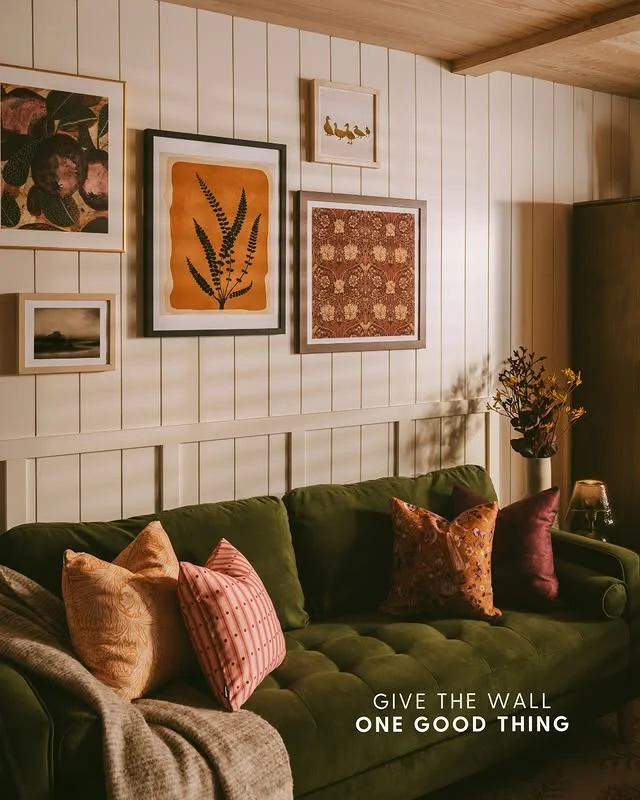
Botanical prints bring a soft, natural feel to a wall without the upkeep of real plants. A row of five prints in matching frames looks neat above a sofa, while a looser cluster suits a reading corner. Warm tones such as rust, ochre, and deep green sit well against cream or sage walls.
DO:
- Use the same frame color across the group for a calm, collected look.
- Mix leaf shapes and sizes so the group feels like a real collection.
- Keep the spacing even, about 2 inches between frames in a straight row.
DON’T:
- Mix glossy and matte frames in one small group, since the clash pulls focus.
- Hang prints so high that you need to crane your neck to see them.
- Crowd the row with other wall pieces that fight for attention.
Woven Basket Wall
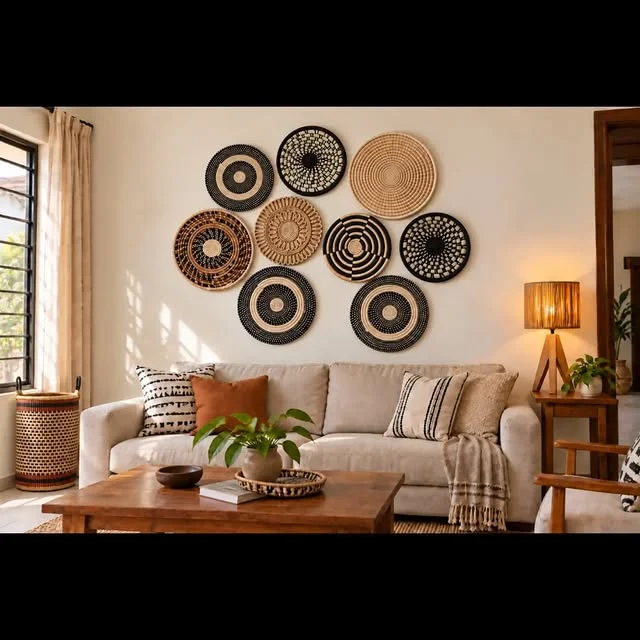
Woven baskets add texture and warmth that flat art cannot, and they are light enough to hang with small nails. A cluster of nine baskets in natural, black, and brown tones reads as one piece from across the room, while each basket still rewards a closer look. This idea suits boho, farmhouse, and relaxed coastal rooms alike.
Quick Tip: Start with the largest basket slightly off center, then build outward with smaller baskets. Odd numbers look more natural than even rows, and a mix of flat and shallow bowl shapes adds depth.
Wood Slat Feature Wall
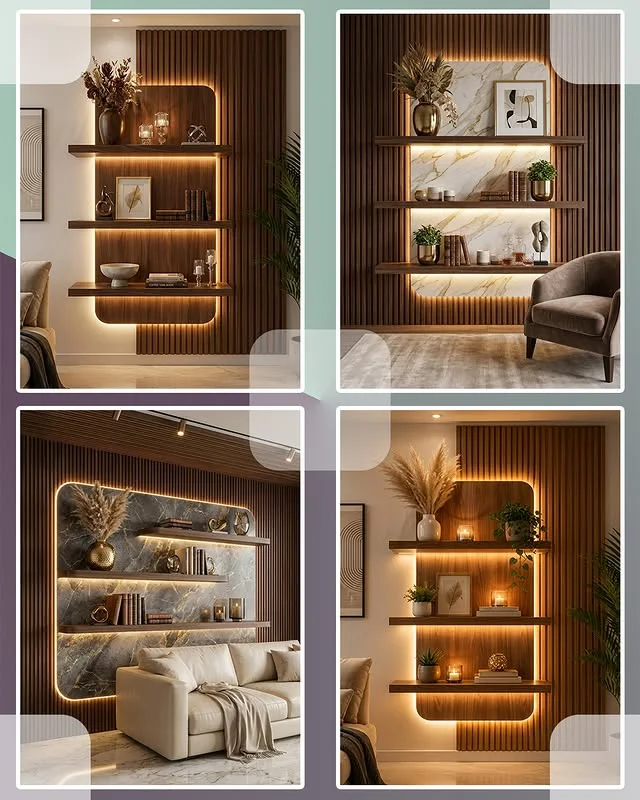
Wood slats turn a plain wall into a warm backdrop for the sofa or the television. Vertical slats draw the eye upward and make a low ceiling feel taller, while the gaps between slats add shadow and texture. Warm oak suits most rooms, while a darker walnut stain fits a moodier scheme.
Before: A flat painted wall behind the sofa, with the furniture floating against it and nothing to anchor the seating area.
After: A slatted timber wall that frames the sofa, adds natural warmth, and gives the room a finished backdrop even before any art goes up.
Macrame Wall Hanging
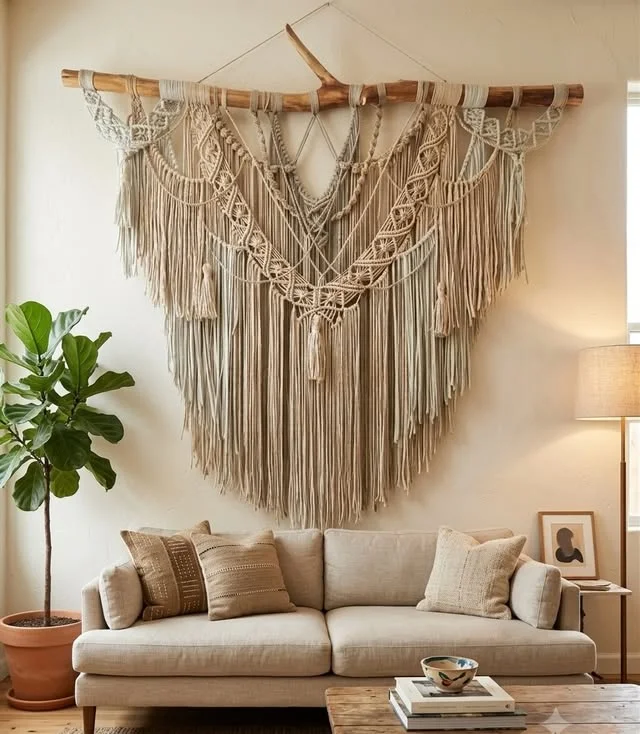
A large macrame hanging softens a hard wall and adds a handmade feel that printed art cannot match. Cream cotton cord against a warm white or plaster wall keeps the look light, while wooden beads or a natural branch add an earthy touch. Hang it where it can be seen from the main seat, not hidden behind a door swing.
Budget and time: A ready made large macrame piece usually costs 60 to 180 dollars, while a simple DIY kit runs 25 to 50 dollars. Hanging takes about 15 minutes: one sturdy hook into a stud, a level check, and a gentle shake out of the fringe. Budget a little extra time to steam or comb the fringe so it hangs straight.
Oval Mirror Row
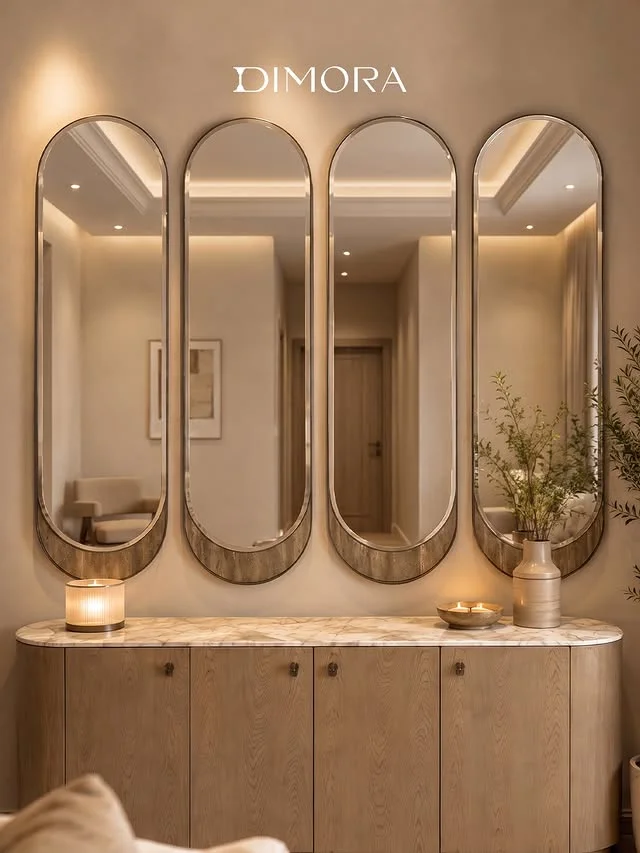
A row of tall oval mirrors is one of the simplest ways to make a room feel brighter and larger. Four matching ovals above a console bounce daylight across the room and soften all the straight lines of sofas, shelves, and frames. Slim metal frames keep the row neat, while a wooden console below grounds it.
Pair it with:
- A long console table below, so the mirrors anchor a useful surface.
- One tall vase or a pair of candles on the console, not a crowded shelf of objects.
- A lamp nearby, so the mirrors catch a warm glow in the evening.
Arched Mirror Pair
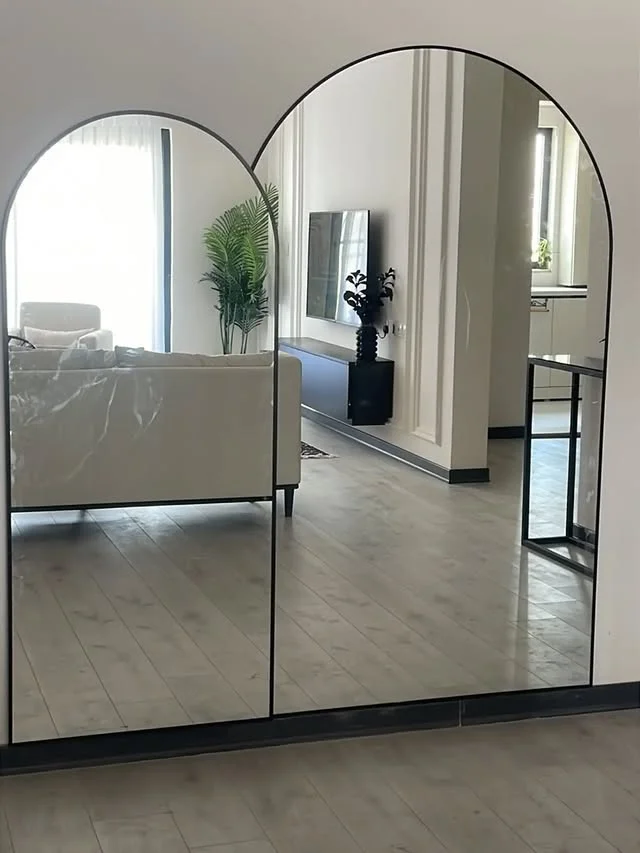
Two tall arched mirrors side by side bring a gentle architectural shape to a plain wall. The arch softens a boxy room, and the pair doubles the light without the busy feel of a full gallery wall. They work well in a hallway, beside a fireplace, or flanking a console.
Sizing guide: Each mirror should be at least 24 inches wide to read as a pair rather than two narrow strips. Leave 4 to 6 inches between them, and hang them so their centers sit at eye level. If they flank a console, keep the bottom of each mirror 6 to 8 inches above the tabletop.
Picture Ledge Display

Picture ledges let you swap art and photos without new nail holes every time, which makes them ideal for family photos and seasonal prints. White ledges on a plain wall can hold a dozen or more framed pieces, layered front to back. Lean larger frames at the back and smaller ones in front so every image stays visible.
- Mount the lower ledge at eye level and the upper ledge 12 to 14 inches above it.
- Place the largest frames first, leaning them against the wall.
- Layer medium frames in front, slightly overlapping the large ones.
- Fill gaps with small frames and one tiny plant or candle.
- Swap one or two pieces each season to keep the display fresh.
Sculptural Wall Panels
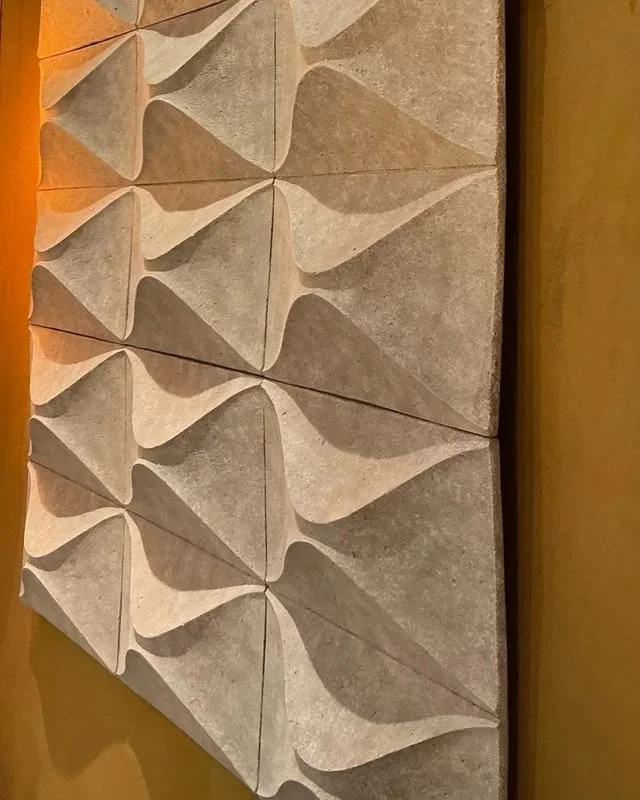
Three dimensional wall panels add depth that a flat print cannot, catching light and shadow through the day. Stone look panels in a repeating pattern suit a modern room, while carved wood panels suit a warmer scheme. One feature section is enough: cover the wall behind the sofa or the fireplace, not every wall in the room.
- Cover one wall only, so the texture stays a feature rather than a distraction.
- Keep furniture in front simple, since the panels already carry the detail.
- Use warm white or soft beige panels in a small room to avoid a heavy feel.
- Wipe panels with a dry cloth, since dust settles in the grooves.
Large Textured Artwork
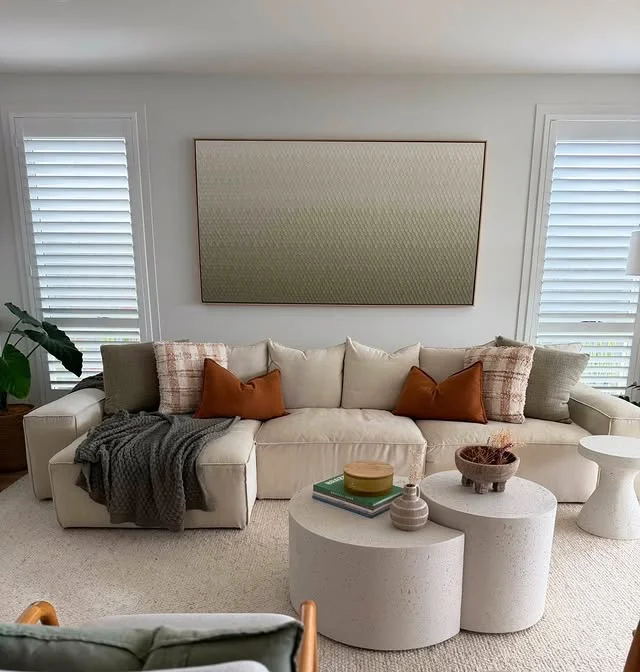
A large textured artwork brings a quiet, handmade feel to a modern room. The raised, woven looking surface catches daylight and changes through the day, so the wall never looks flat. Soft sage and cream tones suit almost any sofa color, and the piece pairs well with linen, boucle, and light wood.
DO:
- Hang it centered above the sofa, with at least 6 inches of clear wall on each side.
- Keep nearby cushions simple so the texture stays the star.
- Light it with a picture light or a nearby lamp in the evening.
DON’T:
- Hang it in a damp spot, since textured finishes and moisture do not mix.
- Surround it with busy patterned art that hides its subtle surface.
- Touch up marks with the wrong paint shade, which shows up in daylight.
Decorative Plate Wall
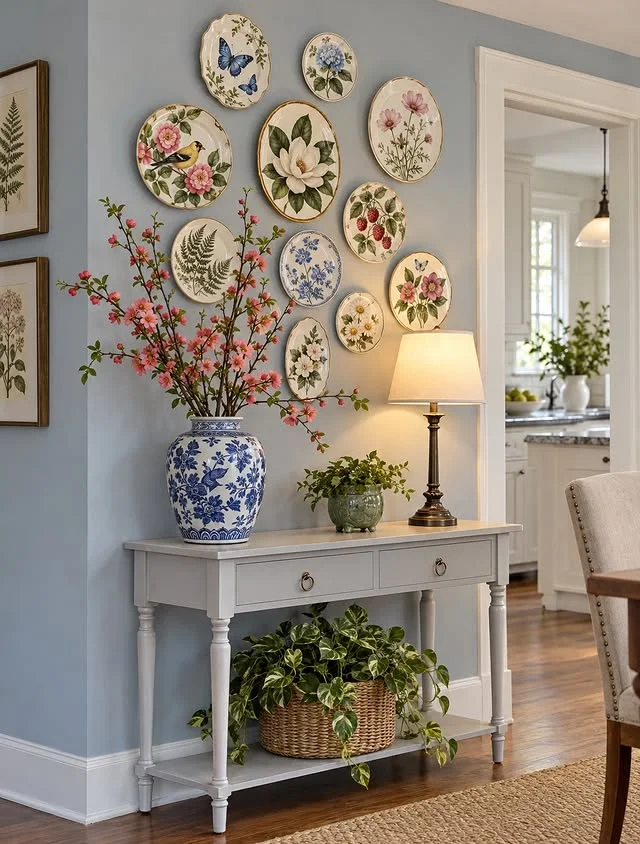
A wall of decorative plates is a warm, collected look that suits dining corners and living rooms alike. Floral plates, blue and white patterns, and handmade ceramics all work, as long as one color ties them together. Plate hangers made for walls keep each plate secure, and the whole display costs far less than framed art.
Quick Tip: Trace each plate on paper and tape the circles to the wall first. Start with the biggest plate near the center, then fill outward, keeping 2 to 3 inches between plates so the wall color still shows through.
Styled Floating Shelves
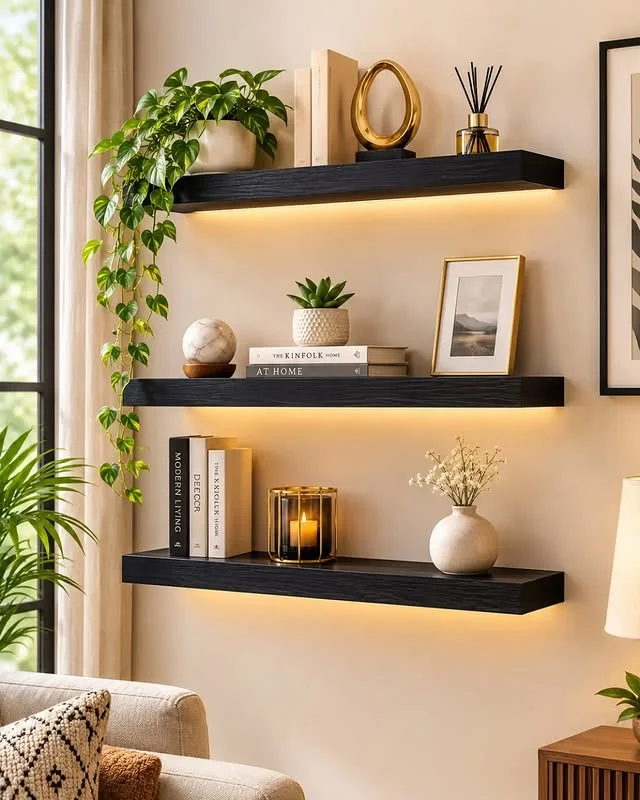
Floating shelves give you display space without the bulk of a bookcase, and they suit rooms where floor space is tight. Black shelves with warm LED strips look modern, while light wood shelves suit a softer room. The trick is editing: a few well chosen objects beat a shelf packed end to end.
Before: A bare wall above a sideboard, with books and small objects tucked away in cupboards and nothing to look at at eye level.
After: Two or three floating shelves with trailing plants, stacked books, and one vase each, giving the wall life without making the room feel cluttered.
Sconce Lit Artwork

Wall sconces flanking a painting turn a simple piece of art into an evening feature. The warm light draws the eye after dark and makes the whole seating area feel cozy. Battery sconces work well for renters, while wired sconces suit a longer term home.
Budget and time: A pair of plug in or battery sconces usually costs 40 to 120 dollars, plus 20 to 40 dollars for a framed print if you do not already own one. Mounting takes about 30 minutes per sconce with a level and a pencil, and no electrician is needed for battery or plug in styles. Keep sconces 6 to 8 inches from the frame edge so the light washes the art evenly.
Gallery Wall Around TV
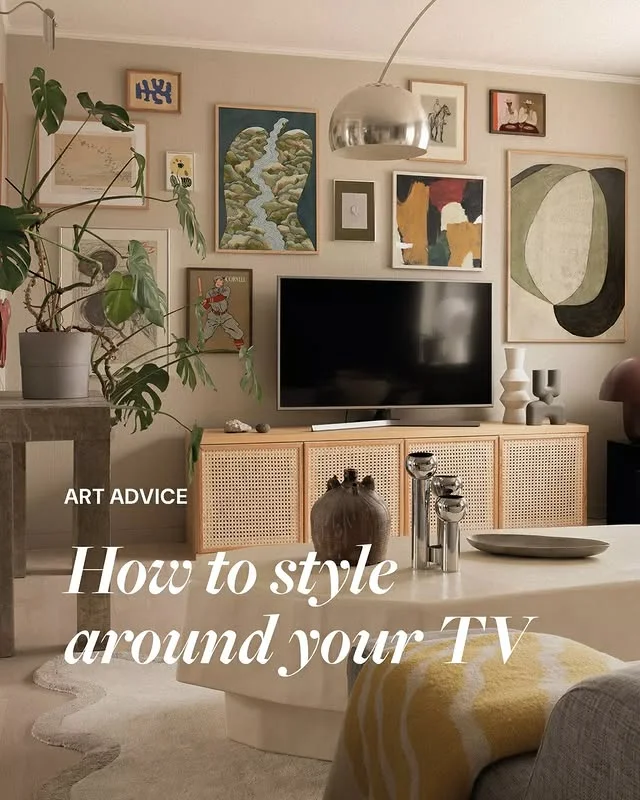
A gallery wall around the television makes the screen feel like part of the room instead of a black box on the wall. Small frames clustered around the TV soften its edges, and the eye reads the whole wall as art rather than electronics. Keep frames small and simple so the screen still works for watching.
Pair it with:
- Small square frames in one color, so the cluster reads as a single unit.
- One or two landscape prints to balance portrait family photos.
- A low console below, which grounds the television and the frames together.
Forest Tapestry Wall
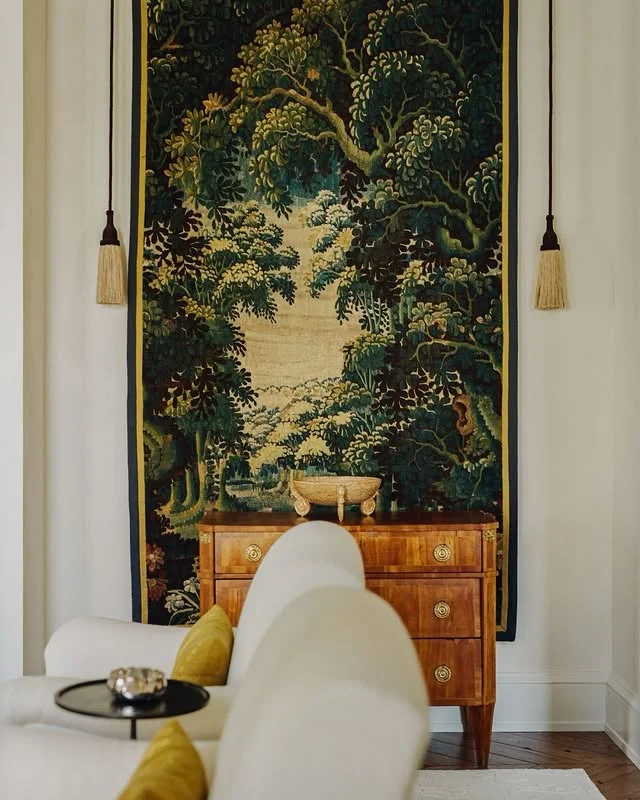
A tall forest tapestry brings the calm of the outdoors onto a plain wall, and it is far lighter than framed art of the same size. Deep green tones suit a neutral room, and the fabric softens echo in rooms with hard floors. Hang it above a chest of drawers or a console so the bottom edge stays clear of furniture.
Sizing guide: The tapestry should be at least two thirds as wide as the furniture below it. Hang it with a slim rod or a set of clips so the fabric hangs flat, and leave 4 to 6 inches between the bottom edge and the top of the furniture. Steam out fold lines before hanging for a smooth finish.
Framed Textile Art
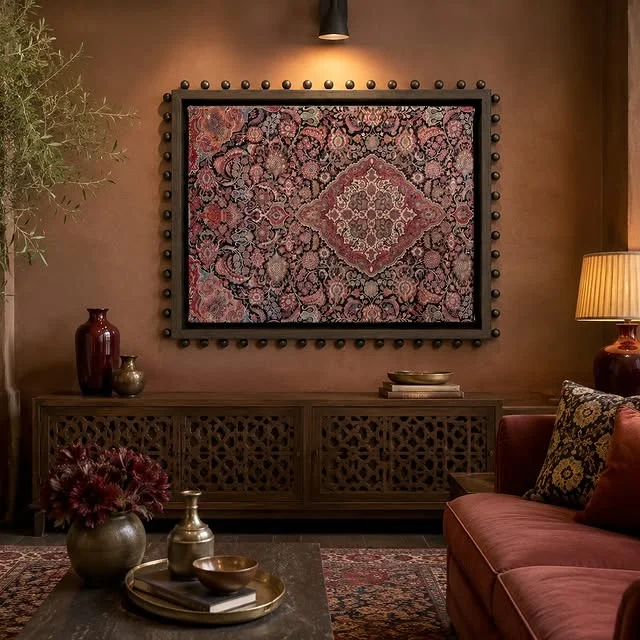
Framed textile art, from an ornate woven panel to a vintage rug fragment, adds color and craft to a wall in a way paper prints cannot. A terracotta or warm toned wall makes the textile pop, while a simple dark frame keeps the focus on the weave. This idea suits rooms that already mix wood, brass, and natural fibers.
- Choose a textile with one strong color you can repeat in a cushion.
- Frame it behind glass only if it will hang near a kitchen or a fireplace.
- Hang it at eye level, centered on the wall section it fills.
- Keep nearby wall pieces minimal so the textile stays the focal point.
Ceramic Grid Artwork
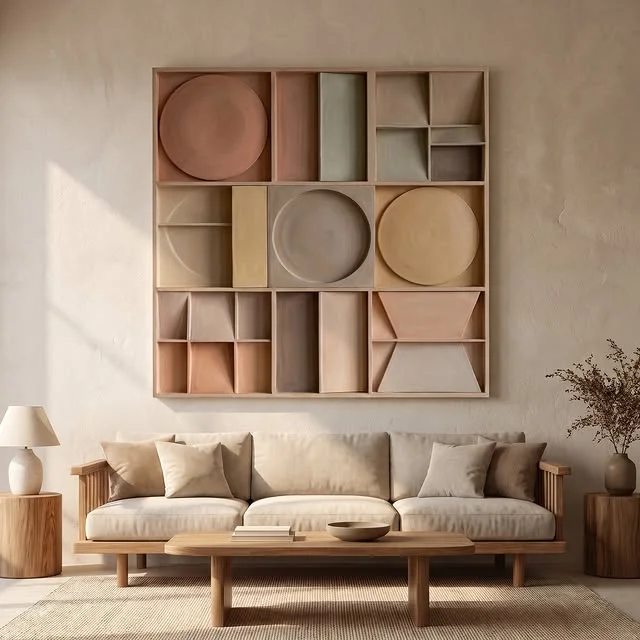
A grid of ceramic tiles brings an artistic, gallery feel to a living room without the price of a large painting. Circles, rectangles, and triangles in soft terracotta, sage, and cream sit inside one large wooden frame, so the piece reads as a single artwork from across the room. It suits a warm, minimal room with light wood and linen.
- Choose earthy, matte finishes for a warm room and glazed finishes for a sleek room.
- Hang heavier ceramic pieces into a wall stud, not just drywall.
- Leave clear space around the frame so the grid reads cleanly.
- Dust with a soft brush, since cloths can catch on rough edges.
Collected Art Mix
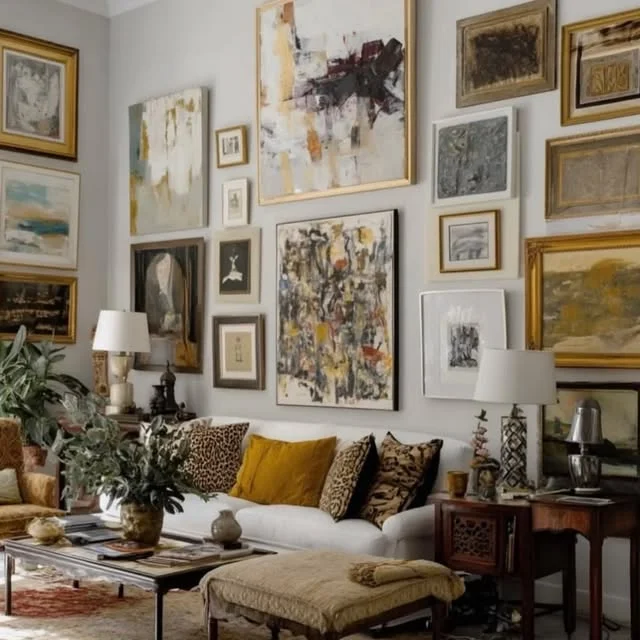
A collected art mix is the most personal wall of all: framed prints, small paintings, and photos gathered over time, hung close together with no strict grid. The trick is a shared thread, such as warm wood frames or a palette of cream, brown, and soft green. When every piece shares one thread, even very different art looks intentional.
DO:
- Stick to one frame material or one mat color across the whole wall.
- Include one mirror or one small textile to break up rows of frames.
- Let the arrangement grow slowly, adding pieces as you find them.
DON’T:
- Buy a full matching set in one trip, since it reads as a shop display.
- Hang pieces at random heights with no shared center line.
- Fill every inch of wall, since a little blank space keeps the eye calm.
Conclusion
Warm walls come from pieces you enjoy looking at, not from following one style perfectly. These living room wall decor ideas work best when you start with one piece, hang it at eye level, and live with it for a week before you add more. That slow layering is how a room starts to feel collected rather than decorated.
For more inspiration, explore these related guides: living room decor ideas and modern living room decor.



2 Comments