
20 Neutral Living Room Decor to Bring Your Vision to Life
A calm room in soft tones starts with one clear decision: let the big pieces stay quiet so the textures can speak. Beige, cream, taupe, and warm white give a living room space to breathe, and they make it easy to change the mood later with a throw, a vase of branches, or a new lamp. The rooms below all follow that rule, and none of them needed a full renovation to get there.
Start with the sofa and the light, then add one layer at a time. Keep the palette to three or four neutrals, repeat each one at least twice, and leave some empty floor and wall space on purpose. Use these neutral living room decor ideas as a shortlist for your own home, picking the two or three that fit the way you actually live.
Beige Sectional Anchor
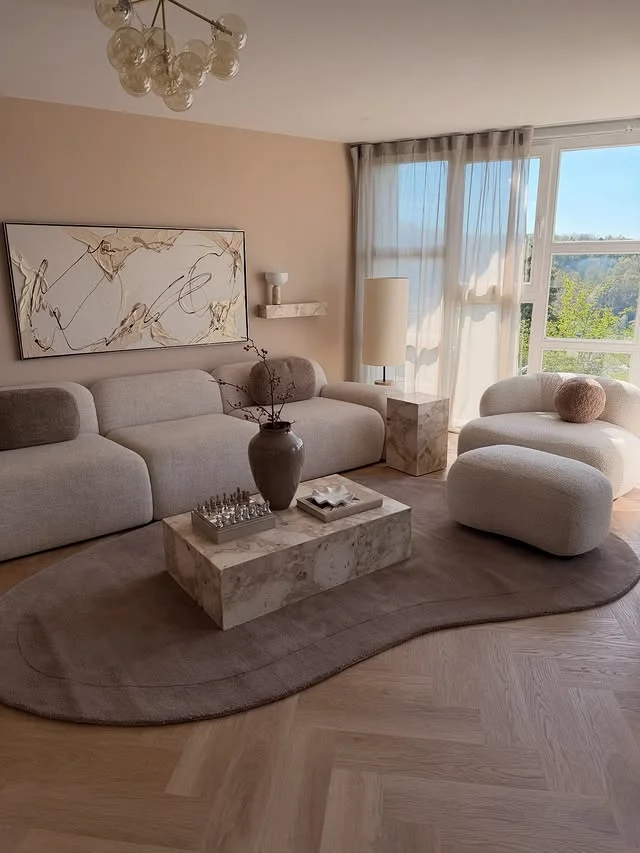
A large beige sectional is the easiest anchor for a neutral room, because it gives everyone a place to sit without setting a strong color direction. Here it sits against a warm plaster toned wall under a large abstract painting in cream and black, with a marble coffee table and a rounded boucle chair and ottoman nearby. Sheer curtains soften the tall windows, and a dark brown rug with a curved edge keeps the seating group feeling grounded rather than boxy.
- Choose a sectional in a mid beige, not a bright white, so everyday marks show less.
- Repeat the rug tone in one cushion or throw so the floor and the seating feel connected.
- Keep the coffee table low and simple so the art above the sofa stays the focal point.
- Add one dark vase or bowl to stop a pale room from looking washed out.
If your sectional already fills the room, you do not need more seating. One small chair or ottoman that can move around the room is enough, and it keeps the layout flexible for guests.
Sheer Curtain Glow

Sheer curtains change a beige room more than almost any other single purchase, because they turn hard daylight into a soft glow. In this room, floor to ceiling sheers cover two walls of windows, with heavier taupe drapes at the edges for evenings. Two beige sofas and two matching armchairs sit on a pale patterned rug, and the whole arrangement feels bright even though every piece is a quiet neutral.
- Hang sheers from the ceiling, not from the top of the window frame, so the windows look taller.
- Choose a warm white sheer rather than a blue white one, so the light stays soft.
- Layer a heavier drape at each side for privacy at night and for winter insulation.
- Keep the curtain fabric plain, since pattern on the windows competes with the rug and cushions.
Sheers also help a room with a television or a leaning mirror at one edge, as here, because the eye goes to the light first. If full length sheers feel too formal, a simple linen panel that just brushes the floor gives the same soft effect.
Faux Fur Layers
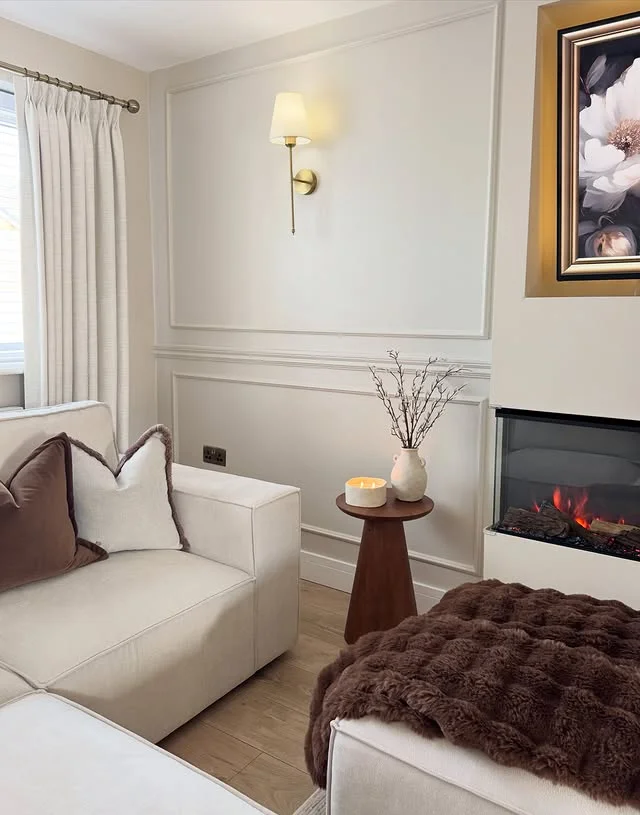
A neutral room can feel cold if every surface is smooth, and that is where a faux fur throw earns its place. This cream sectional corner pairs a thick brown faux fur throw on the ottoman with brown and cream cushions, a small wooden side table, and a lit candle beside a vase of bare branches. The electric fireplace and the paneled wall behind it add structure, so the soft layers read as cozy rather than messy.
DO: Put the thickest throw on the seat people use most, where it will actually be reached for on cold evenings.
DON’T: Cover every seat in fur at once, or the room will look like a blanket display instead of a place to sit.
One fur layer is enough in most rooms. Pair it with a smooth linen cushion and a woven basket nearby, and the mix of textures will do more than any extra color could.
Boucle Ottoman Softness
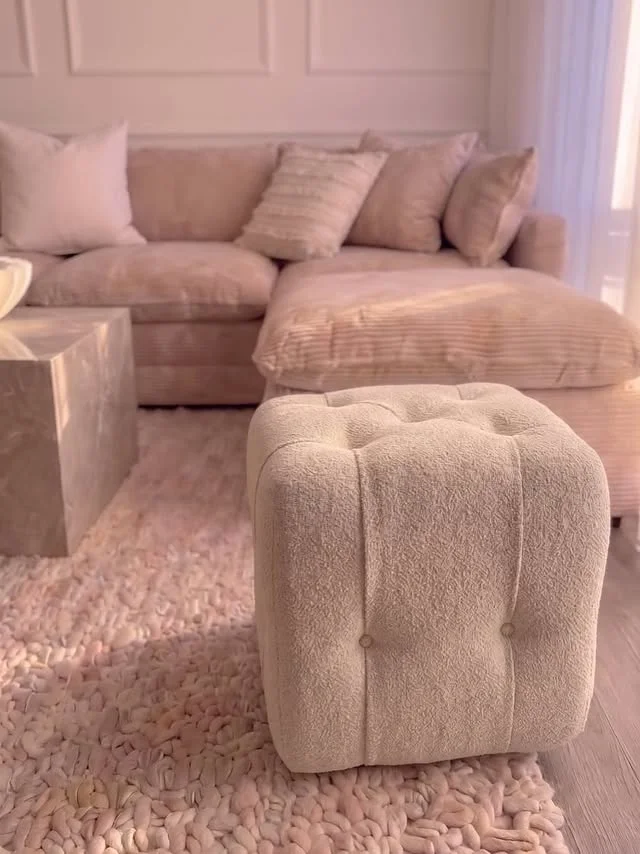
A boucle ottoman is a small piece that changes how a whole seating area feels. The cream tufted cube in the foreground sits on a thick, pebbled rug in front of a soft beige sectional, and its nubby texture invites you to put your feet up. A marble topped side table at the edge of the frame adds a cool, hard surface to balance all that softness.
Quick Tip: Pick an ottoman in the same tone family as the sofa but in a different texture, so it looks deliberate rather than matched, and it can double as extra seating when guests arrive.
Ottomans work best when they can move. A light cube can slide to the side when the room needs floor space, while a heavy coffee table cannot, so a small ottoman is a good first buy for a renter or anyone still testing a layout.
Wood Beam Warmth
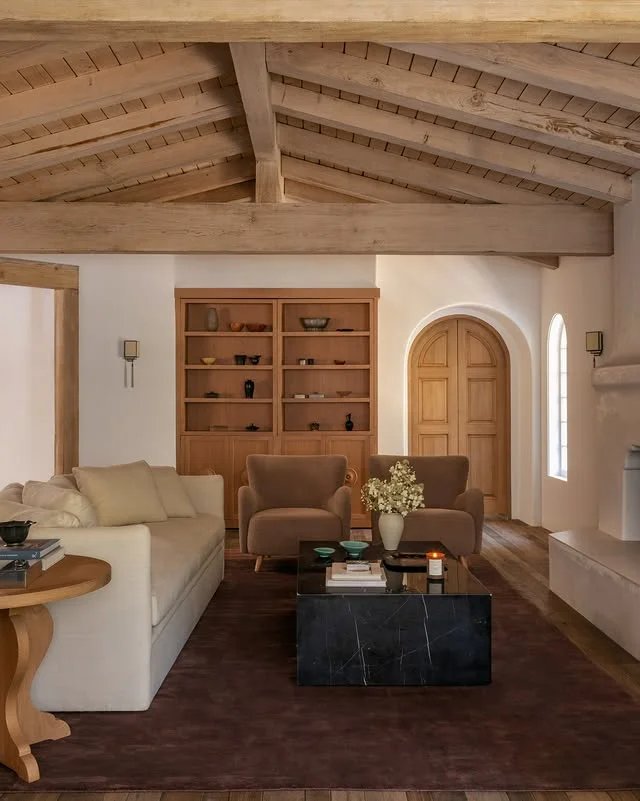
Exposed wood beams give a neutral room its warmth, especially under a high vaulted ceiling. Here pale wood beams and a planked ceiling sit above a cream sofa, two brown armchairs, and a black marble coffee table on a deep brown rug. Wooden shelves and an arched wooden door repeat the timber tone, so the room feels warm even though the walls stay white.
Before: A tall white room with pale furniture and no wood above eye level, which can feel empty and a little echoey.
After: The same pale furniture under a timber ceiling, with wood repeated in the shelves, the door, and the rug tone, so the height feels like a feature instead of a void.
You do not need real beams to get this effect. A wooden coffee table, a timber shelf, and a wood framed mirror can bring the same warmth to a flat ceiling room, as long as the wood tones stay close to each other.
Stone Fireplace Focus
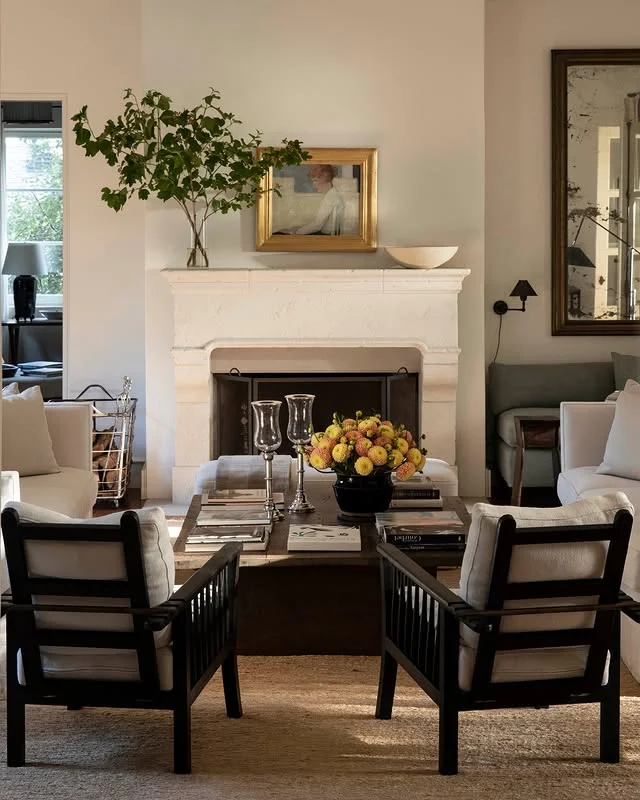
A light stone fireplace gives a neutral room a natural center, and it asks for very little styling. This mantel holds a tall vase of green branches, a small gold framed portrait, and a shallow white bowl, while two black framed chairs with cream cushions face a low wooden coffee table. A bowl of yellow and orange flowers on the table adds the only strong color, and it can be swapped with the seasons.
Cost: A stone fireplace surround is a major project, but a simple mantel shelf, a pair of candlesticks, and a tall vase of branches cost far less and give a plain wall a similar focal point.
Time: About an hour to style a mantel well, including stepping back to check the balance from the seating.
Keep mantel styling low at the sides and taller in the middle, or the reverse, but do not make both sides tall. One tall branch arrangement is enough, and the rest of the mantel should stay quiet.
Twin Sofa Symmetry
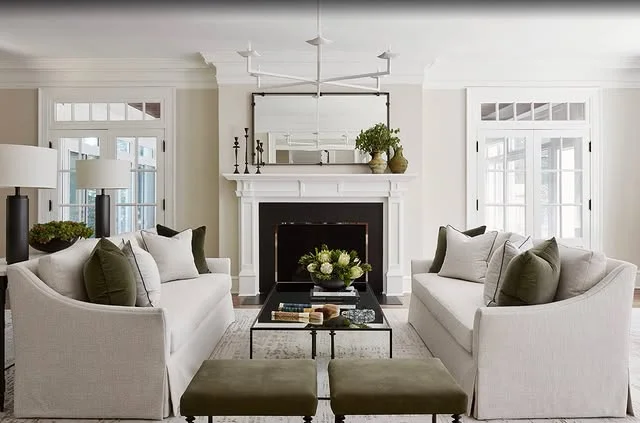
Two matching sofas facing each other is the most sociable layout a neutral room can have, because nobody sits with their back to the conversation. Here two cream sofas face across a glass coffee table in front of a white fireplace, with a large mirror above the mantel and two olive footstools in the middle. Olive cushions are the only repeated accent, and they keep the cream from feeling flat.
Time: About two hours to move two sofas into a facing layout, center the rug, and restyle the coffee table, once the fireplace wall is clear.
Symmetry suits rooms with a fireplace or a large window as the anchor. If your room is long and narrow, push one sofa against the wall and float the other, keeping the same facing idea without blocking the walkway.
Open Plan Flow
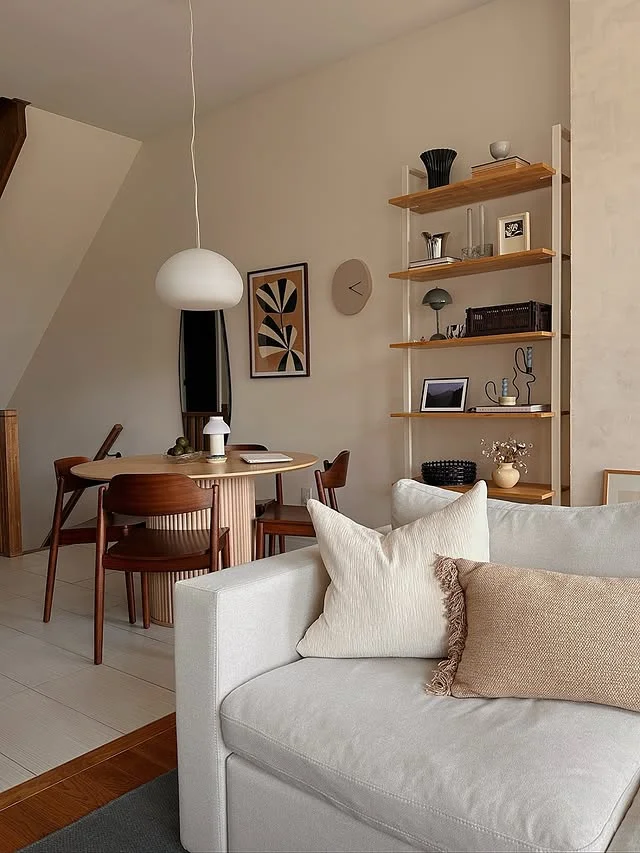
In an open plan home, the living area has to share space with dining without looking like two rooms pushed together. This space keeps a light gray sofa in the foreground, a round wooden dining table with matching chairs behind it, and open wooden shelves on the wall. The palette stays in cream, pale wood, and soft gray across both zones, so the eye travels through the space instead of stopping at a boundary.
A low sofa back helps here, because it does not block the view into the dining area. A rug under the sofa alone, rather than under both zones, also marks the living area without building a wall between the two uses.
Ottoman Tray Styling

An ottoman with a tray is the most useful piece in a small neutral living room, because it works as a coffee table, a footrest, and extra seating. This sunny room pairs a beige sectional with a large square ottoman, a wooden tray holding a candle and a small jar, and a round mirror above a white storage unit. Striped cushions and a soft throw keep the beige interesting without adding a new color.
- Put a firm tray on the ottoman before adding candles or cups, so nothing tips on soft upholstery.
- Keep the tray styling to three items at most: one candle, one small plant or vase, and one book or box.
- Choose a tray in wood or rattan to add a natural texture against the fabric.
- Leave half the ottoman top empty, so it can still be used as a footrest.
Sunlight is doing a lot of work in this room, and it is worth copying: pull the seating near the window when you can, and keep the window dressing light so the sun reaches the sofa.
Dark Wood Grounding
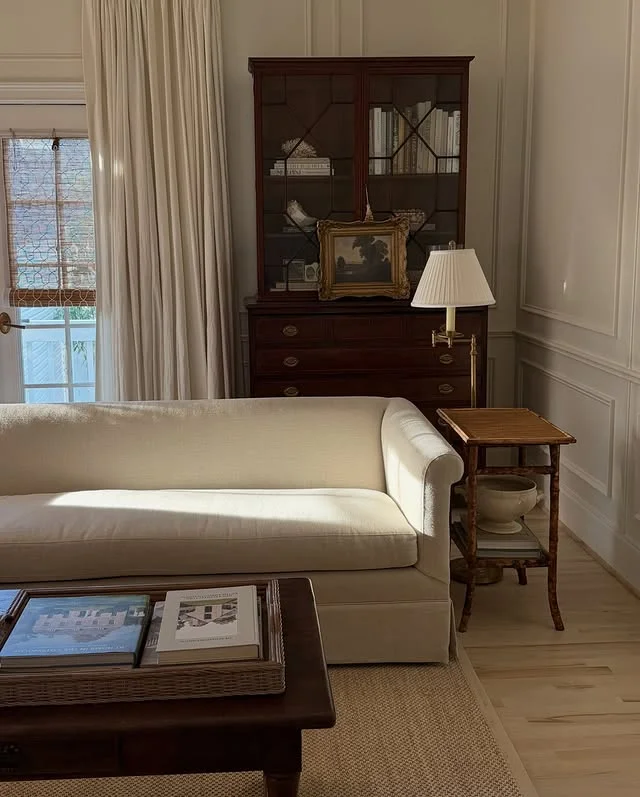
Dark wood is the anchor that stops a pale room from floating away. A cream sofa sits in front of a tall dark wood cabinet with glass doors, a woven tray of books rests on a dark coffee table, and a small bamboo side table holds a bowl. Cream curtains and a natural rug keep the room light, while the dark pieces give it weight and a sense of age.
- Repeat one dark wood tone in at least two pieces, such as a cabinet and a coffee table, so it looks intentional.
- Keep the dark pieces to the edges of the seating group, not in the middle of the walkway.
- Pair dark wood with cream upholstery rather than white, so the contrast feels warm instead of harsh.
- Add one brass or gold lamp to warm the dark wood further.
If dark furniture feels too heavy for your room, start with one piece, such as a side table, and live with it for a week before adding a second. The room will tell you quickly whether it needs more weight or more light.
Rounded Boucle Seating

Rounded boucle seating makes a neutral room feel soft from every angle, because there are no sharp corners to catch the eye. Two large rounded sofas and two matching swivel chairs sit on a pale patterned rug, with a low glass topped coffee table in the middle and tall vertical blinds behind them. Large abstract art on the side wall and a tall plant add height without adding color, and the whole room reads as calm and welcoming.
DO: Let one rounded piece set the tone, then repeat the curve in a rug, a mirror, or a round coffee table.
DON’T: Mix rounded boucle with a lot of sharp black metal furniture, or the softness will feel accidental instead of planned.
Curves also help in family rooms, since there are no corners for small children to bump into. A round rug under a curved sofa strengthens the effect, while a rectangular rug can make the curves look out of place.
Slatted Media Wall

A media wall in warm wood slats turns a television into part of the room instead of a black box on a white wall. Here vertical slats run behind the television and above a long low console with an electric fire, flanked by open shelves with vases and framed photos. Two beige sofas with brown cushions face the wall, and two woven pendant lights warm the ceiling. This is a good example of neutral living room decor that still handles everyday television watching gracefully.
Quick Tip: Keep the console lower than the sofa seat height if you can, and hide cables inside the console, so the media wall reads as furniture rather than equipment.
The slats also add texture that a flat painted wall cannot, which matters in a neutral room where texture carries the design. If full slat paneling is too much work, a single slatted panel behind the television gives most of the same effect.
Doorway Framed View
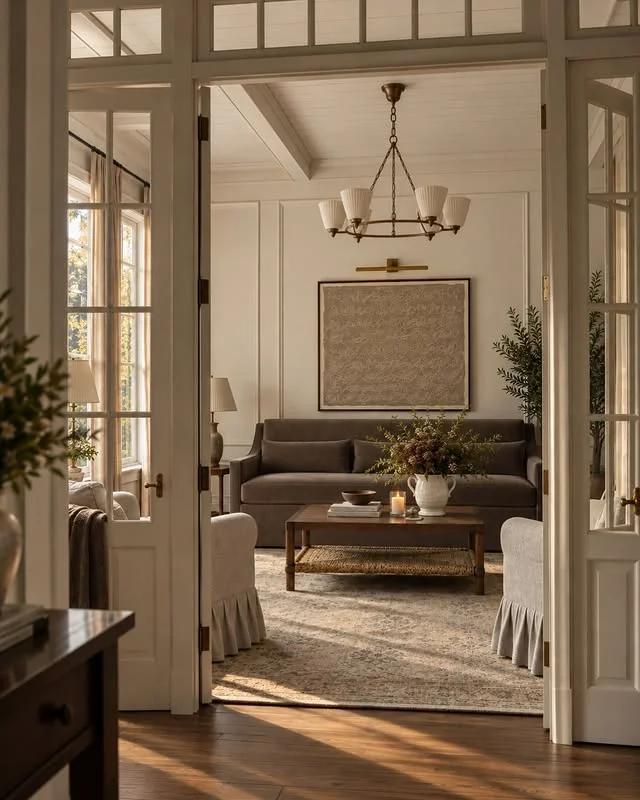
Seeing a living room through open French doors is one of the best tests of a neutral palette, because the frame forces you to look at the whole composition at once. Through these doors, a dark brown sofa sits under a large abstract artwork, with a wooden coffee table, a vase of dried flowers, and two skirted chairs in the foreground. The rug, the chandelier, and the pale walls all stay in the same warm family, so the view feels settled rather than busy.
Before: A room glimpsed through a doorway with furniture pushed to the edges and no clear center, so the first view feels scattered.
After: The same room with the sofa centered under one large artwork and the coffee table centered on the rug, so the doorway frames a complete picture.
If your living room opens off a hall, stand in the doorway and check the view before you finish styling. Move one piece at a time until the framed view feels balanced, and the rest of the room will usually fall into place too.
Candlelit Coffee Table

Candles are the cheapest way to make a neutral room feel finished in the evening. A round white coffee table holds two lit candles, a small cup, and a vase of white orchids, in front of a white sofa dressed with a gray faux fur throw. A gallery wall of black framed prints hangs behind the sofa, and dark gray curtains frame the window at the side.
Cost: Two good candles cost about 15 to 40 dollars, and a simple white coffee table tray costs about 20 dollars, which is all this look needs beyond the sofa and throw you already own.
Time: About ten minutes to light the candles, fluff the throw, and place the vase, which is the whole styling job.
Keep candles on a tray or a heat safe plate, and never leave them burning in an empty room. The glow matters more than the scent here, so plain candles in neutral holders suit the palette better than strongly colored ones.
Bay Window Light
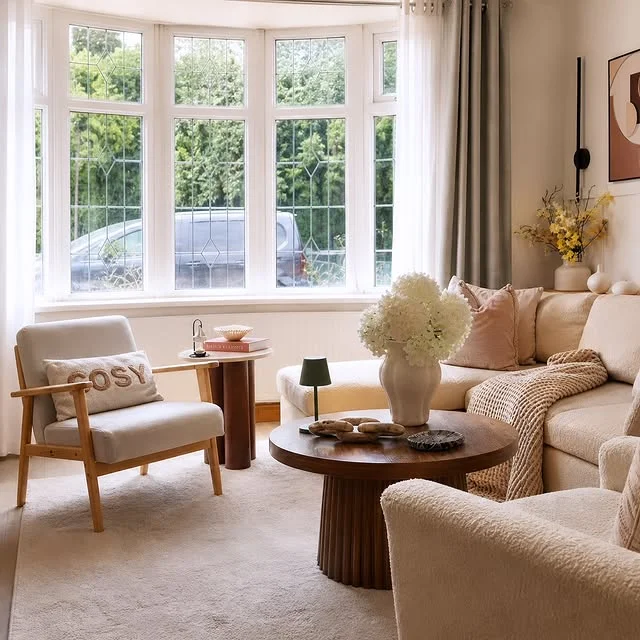
A bay window is a gift for a neutral room, because it brings in light from three directions at once. This room places a beige sofa and a wood framed armchair around a round wooden coffee table under the bay, with a cream rug underfoot and a large vase of white flowers on the table. Sheer curtains and heavier taupe drapes let the light in during the day and close the room in at night.
Time: About an hour to dress a bay window well, including hanging sheers inside the bay and heavier drapes outside it, so both layers work without tangling.
Keep furniture low in front of a bay window so the light reaches the whole room. A tall bookcase in front of a bay blocks the best feature of the room, while a low chair or a small side table lets the window do its work.
Sculptural Pendant Glow
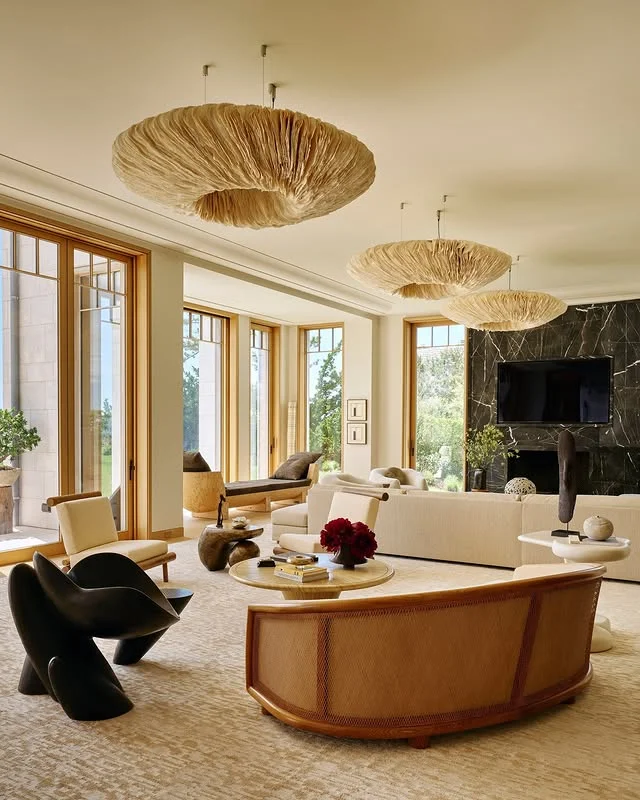
Lighting is the piece most neutral rooms get wrong, because a single ceiling light flattens every texture in the room. Three large sculptural woven pendants hang at different heights over this long living space, above cream sofas, a curved wooden sofa back, and a round coffee table. Tall windows and a black marble fireplace wall give the room structure, while the pendants give it warmth after dark.
A pendant at the right height matters more than its price. Hang it low enough to feel part of the seating area, but high enough that nobody has to duck under it, and dim it in the evening so the room glows instead of glaring.
Cream Sectional Calm
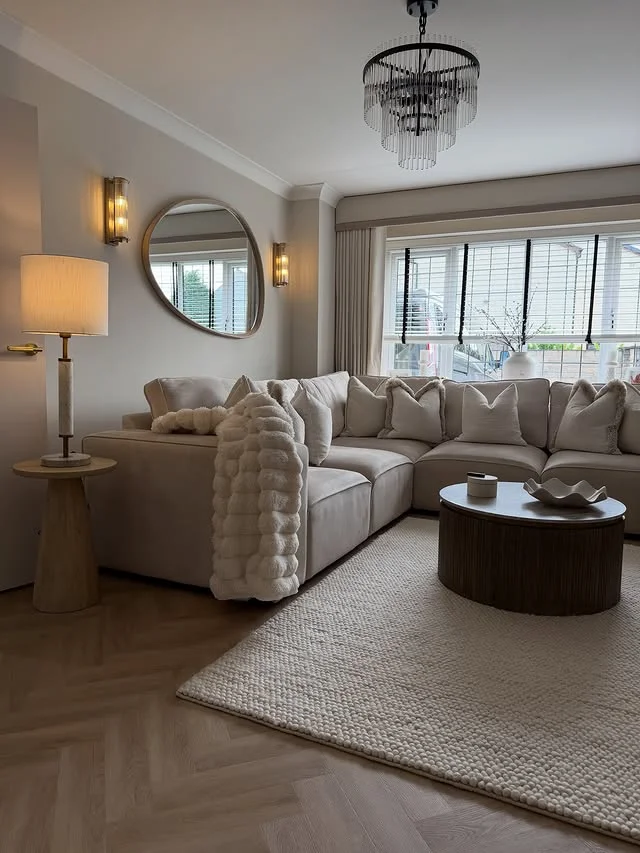
A cream sectional in an L shape makes a small room feel larger, because it uses a corner that often goes to waste. This room pairs the sectional with a round mirror, warm wall lights, a crystal chandelier, and a dark round coffee table on a chunky cream rug. A thick cream throw draped over the chaise adds texture, and the dark table stops the pale palette from looking flat.
- Use the chaise end for reading, with a small side table and a lamp within reach.
- Keep the rug large enough to sit under the front legs of the whole sectional.
- Add one dark piece, such as a coffee table or a lamp base, to ground all the cream.
- Choose cushions in cream and pale taupe only, so the sectional stays the star.
Cream sectionals need washable covers or a washable throw on the most used seat. That one practical choice is what makes a pale sofa livable for families and pets.
Corner Sectional Layout
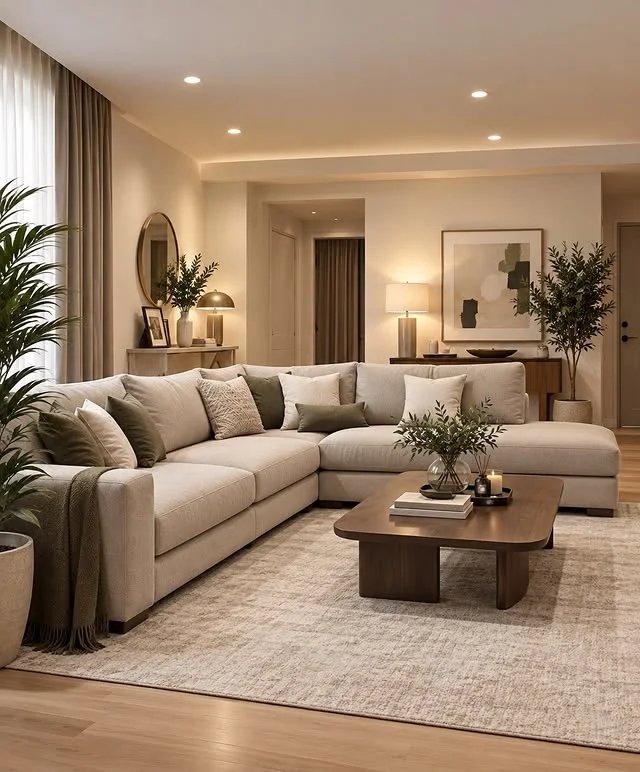
An L shaped sectional in a corner is the most practical layout for a family living room, because it seats five or six people without filling the room with separate chairs. Here a long beige sectional wraps the corner, with olive and cream cushions, a dark wood coffee table, and tall plants at each end. A pale patterned rug and warm table lamps keep the large seating group feeling soft rather than heavy.
- Measure the corner before buying, and leave at least 60 centimeters of walkway around the open side.
- Put the longest side of the sectional against the longest wall, so the room stays balanced.
- Place the coffee table about 40 centimeters from the sofa edge, close enough to reach but far enough to walk around.
- Add tall plants at the ends of the sectional to soften the corners of the room.
Olive cushions are the only accent here, and they work because they appear three times: on the sofa, in the throw, and in the plants. That repetition rule is worth copying with any accent color you choose.
Quiet Corner Reading
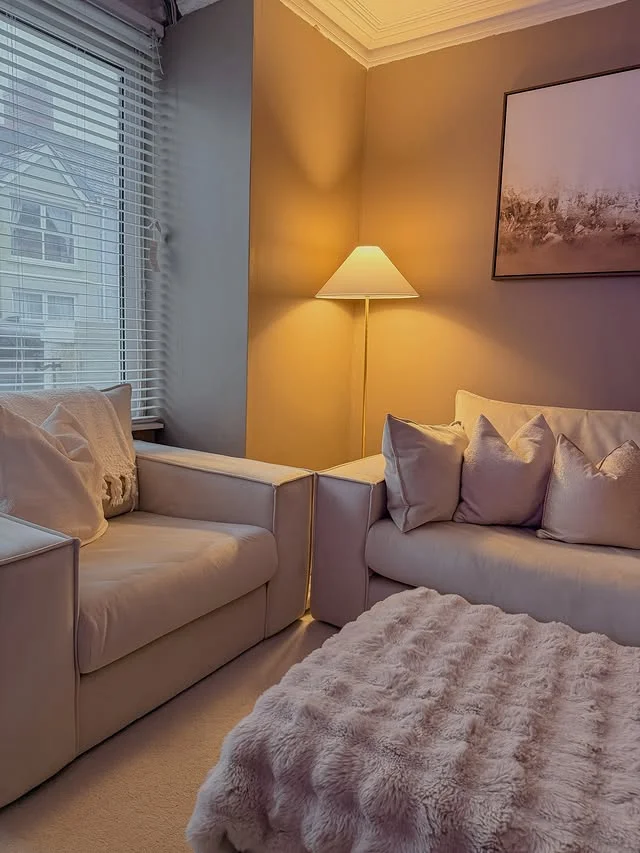
Every living room needs one quiet corner, even if the rest of the room is built for conversation. Two beige sofas sit at an angle in this corner, with a tall floor lamp glowing between them, a fluffy pale throw on the ottoman, and a framed landscape print on the wall. Window blinds filter the daylight, so the corner feels private without being dark.
DO: Put the reading lamp behind the shoulder of the seat, not in front of it, so the light falls on the book and not in the eyes.
DON’T: Fill the corner with a desk, a television, and a bookshelf at once, or it will stop being a place to rest.
A quiet corner does not need new furniture. Pull one existing chair toward a lamp and a window, add a throw and a small table for a cup, and the corner will start to be used every day.
Fireplace Twin Seating
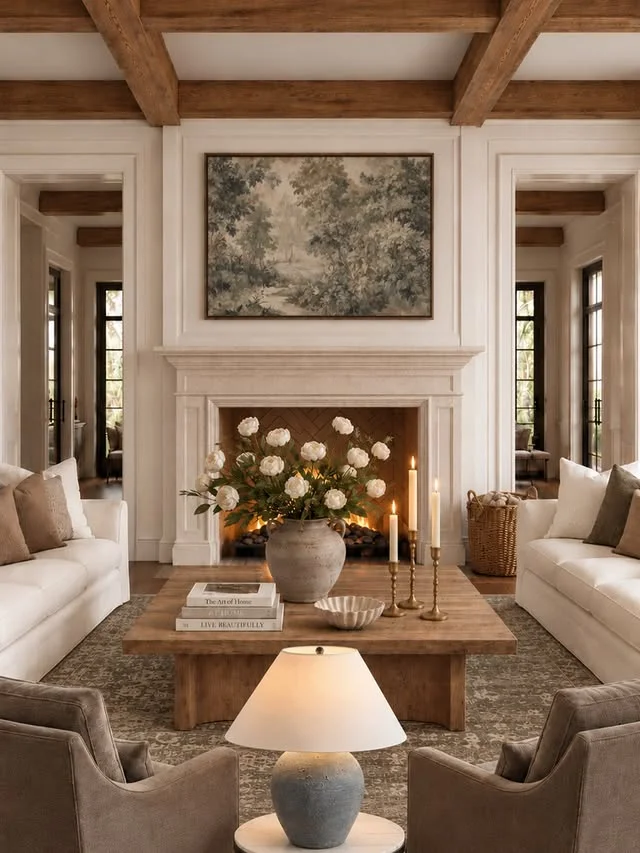
Two white sofas flanking a fireplace is a classic neutral layout for a reason: it is balanced, it seats a group, and it gives the fire the attention it deserves. Here the sofas face a large wooden coffee table under a landscape painting above a white mantel, with a vase of white roses, lit candles, and books on the table. Wood ceiling beams and a patterned rug warm the white, and two gray armchairs in the foreground complete the circle.
Quick Tip: When two sofas flank a fireplace, keep the coffee table centered between them and the mantel, and leave the same gap on both sides, so the symmetry reads clearly from the doorway.
Symmetry does not mean everything must match exactly. The cushions here vary in tone, the chairs differ from the sofas, and the room still feels balanced because the sizes and the spacing match.
Conclusion
A neutral living room works when the big decisions are quiet and the small ones are textured: a beige or cream sofa, one repeated wood tone, soft light from sheers or lamps, and one or two natural materials such as boucle, linen, or rattan. Pick the ideas that suit your room size and your budget, and add them one at a time so you can see what each change does before you buy the next piece.
For more inspiration, explore these related guides: modern living room decor ideas and pretty and practical living room decor. The best neutral rooms are rarely finished in one weekend, and they are better for it: each layer you add with care makes the room feel more like yours, and less like a showroom.



One Comment